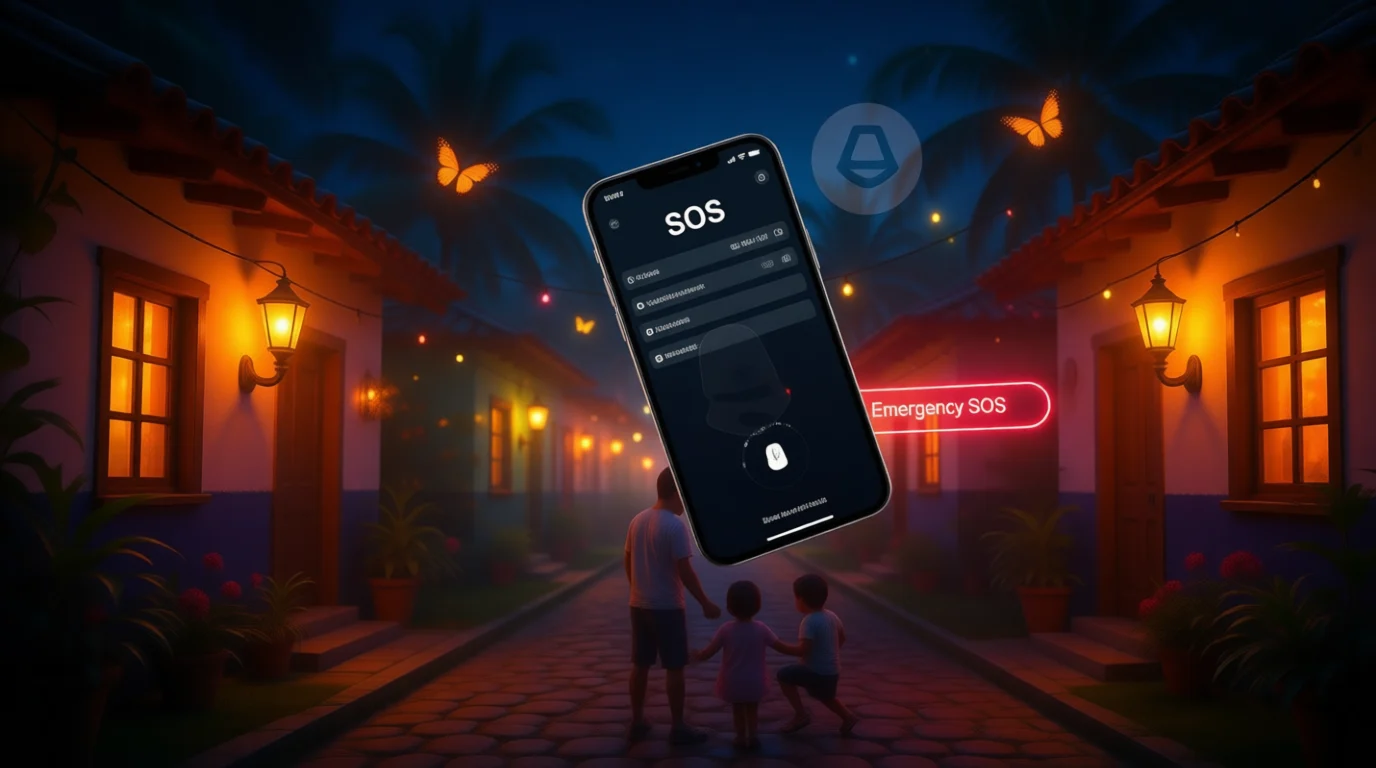
If you’ve ever seen “SOS” appear on your iPhone’s status bar, it can be alarming. You might think something is wrong, or that your phone has an emergency. Don’t worry — SOS on iPhone is usually just a network or emergency feature, not a sign of danger.
Understanding SOS on your iPhone is essential because it helps you:
- Stay informed during network issues
- Use Emergency SOS features correctly
- Avoid unnecessary panic when traveling or in low-signal areas
Whether you’re texting, traveling, or managing family safety, knowing the meaning of SOS helps you use your phone effectively and safely.
⭐ Quick Reply:
- SOS on iPhone usually indicates cellular service issues or emergency calling readiness.
- It does not always mean danger — it’s a safety and connectivity status indicator.
In this article, we’ll explore what SOS means, its background, usage, misconceptions, regional differences, professional relevance, and frequently asked questions.
Definition & Meaning of SOS on iPhone
SOS stands for “Save Our Souls” or “Save Our Ship”, a historic distress signal used in maritime communication. On your iPhone, however, it has two main functions:
- SOS Only: Your phone has no regular cellular service, but you can still make emergency calls.
- SOS with Carrier Name: Your iPhone is connected to a network but restricted to emergency calls only, often due to network restrictions, travel, or weak coverage.
Practical Examples:
Traveler: “My iPhone shows SOS only. Can I still make a call?”
Friend: “Yes, you can call 911 or local emergency numbers; that’s exactly what SOS allows.”
Parent: “The phone says SOS. Is everything okay?”
Teen: “Yes, it just means I can only call emergency services for now.”
Key Point: Seeing SOS on your iPhone is not an error. It’s a safety feature designed to ensure you can always contact emergency services.
Background & History
The SOS signal originated in 1905 as a maritime distress code chosen for its simplicity in Morse code: … — …. It was adopted internationally for ships, airplanes, and other emergency communications.
Apple’s Implementation
Apple integrated SOS features in iOS 11 and later, allowing users to:
- Quickly call emergency services
- Notify emergency contacts automatically
- Access local emergency numbers globally
Evolution of SOS in Smartphones
- Early 20th century: SOS meant maritime danger.
- Modern smartphones: SOS became a safety feature, helping users in weak signal areas or dangerous situations.
- Today, SOS is part of the iPhone’s emergency safety suite, ensuring access to emergency services even when regular network coverage is unavailable.
Usage in Various Contexts
| Context | Meaning | Example |
| Travel | Limited network service | “My iPhone shows SOS only in the mountains.” |
| Emergency | Call for help | Press side button to trigger Emergency SOS. |
| Network Issues | Weak or no signal | “I have SOS; I need to find a stronger network.” |
| Family Safety | Alert contacts | “SOS automatically notifies my emergency contacts if triggered.” |
| International Travel | Access local emergency numbers | “SOS adapts to 112 in Europe and 999 in the UK.” |
Dialogue Examples:
Hiker: “My iPhone shows SOS only in the forest.”
Friend: “That’s normal. You can still dial local emergency services if needed.”
Teen: “The phone says SOS. Should I be worried?”
Parent: “No, it’s just a signal issue. SOS lets you call emergency numbers even if the network is weak.”
Traveler: “Will SOS work abroad?”
Guide: “Yes, it automatically connects to local emergency services like 112 or 999.”
Common Misconceptions & Clarifications
- SOS means my iPhone is broken.
- False. It indicates limited cellular service or emergency calling readiness.
- False. It indicates limited cellular service or emergency calling readiness.
- SOS will automatically call emergency services.
- Only if Emergency SOS is manually triggered (e.g., pressing the side button five times).
- Only if Emergency SOS is manually triggered (e.g., pressing the side button five times).
- Only 911 works in SOS mode.
- Incorrect. SOS adapts to local emergency numbers worldwide.
- Incorrect. SOS adapts to local emergency numbers worldwide.
- SOS only appears during danger.
- False. It can appear anytime your network is restricted or weak.
- False. It can appear anytime your network is restricted or weak.
- SOS drains battery.
- No. SOS is a status display, not a background process.
- No. SOS is a status display, not a background process.
- Only iPhone users in the US benefit from SOS.
- Wrong. SOS works globally with local emergency numbers.
- Wrong. SOS works globally with local emergency numbers.
How to Use SOS on iPhone
Emergency Call:
- Press the side button five times (iPhone 8 or later).
- Slide the Emergency SOS slider to call local authorities.
Automatic Emergency Call:
- Enabled in Settings → Emergency SOS, your phone can call local emergency services automatically.
Notify Emergency Contacts:
- After triggering Emergency SOS, your iPhone can notify selected contacts with your real-time location.
Example Dialogue:
Friend: “I accidentally triggered SOS. What happens?”
You: “Your phone called local emergency services and sent your location to your emergency contacts.”
Tip: Always familiarize yourself with the Emergency SOS settings before traveling.
Regional or Cultural Differences
| Region | Local Implementation | Notes |
| USA | 911 | Standard emergency number |
| UK | 999 | SOS emergency calls supported |
| EU | 112 | Works on iPhone globally |
| Asia | Varies | Phone adapts to local emergency numbers |
SOS automatically adapts to local emergency numbers, ensuring global accessibility.- In some regions, it may show as SOS only, while in others it shows the emergency carrier name.
Comparison With Similar iPhone Alerts
| Alert Type | Meaning | Action Required |
| SOS Only | Limited service; emergency calls possible | Optional: Move to stronger signal |
| No Service | No network | Move to a coverage area |
| LTE / 5G | Full service | Normal operation |
| Emergency SOS Triggered | User-initiated emergency call | Confirm safety and location |
Usage in Online Communities & Social Media
- Many iPhone users ask in forums: “Why does my iPhone show SOS?”
- Social media posts frequently share screenshots with SOS to discuss weak signal zones.
- Tech blogs and YouTube tutorials explain how Emergency SOS works and how to check your carrier network.
Dialogue Example:
User 1: “Why does my iPhone show SOS when my friend’s shows full bars?”
User 2: “You’re likely in a weak coverage spot. SOS still lets you call emergencies.”
Hidden or Misunderstood Risks
- Accidentally triggering Emergency SOS can:
- Call local authorities
- Notify emergency contacts
- Call local authorities
- Always check settings to prevent false alarms.
- Remember, SOS is not a danger alert unless manually triggered.
Suitability for Professional Communication
- It is safe to mention SOS in workplace discussions:
- Example: “My iPhone shows SOS only due to weak reception in the office.” ✅
- Example: “My iPhone shows SOS only due to weak reception in the office.” ✅
- Avoid implying personal danger unless necessary.
- Useful in IT support, travel guidelines, or company mobile policies.
FAQs
Q1: What does SOS mean on iPhone?
- It indicates limited cellular service but allows emergency calls.
Q2: Is SOS dangerous?
- No, it’s a network status indicator, not a warning.
Q3: Can I call 911 or local emergency services?
- Yes, even with limited cellular service.
Q4: How do I turn off SOS?
- Go to Settings → Emergency SOS and disable automatic calls.
Q5: Does SOS notify contacts automatically?
- Only if Emergency SOS is triggered.
Q6: Why does SOS appear randomly?
- Usually due to weak network coverage or traveling between regions.
Q7: Can SOS be used internationally?
- Yes, it adapts to local emergency numbers like 112 in Europe or 999 in the UK.
Q8: Does SOS drain battery?
- No, it’s a status display, not a background process.
Q9: Can I trigger SOS accidentally?
- Yes, pressing the side button 5 times triggers Emergency SOS if enabled.
Q10: Is SOS exclusive to iPhones?
- No, many smartphones have similar emergency features, but Apple integrates Emergency SOS with location notifications and emergency contacts.
Conclusion
SOS on iPhone is a safety and network feature that ensures you can call emergency services even when regular cellular coverage is unavailable. It’s not a sign of danger, a system error, or a broken phone. By understanding how SOS works, how to use Emergency SOS, and its global functionality, you can stay safe, informed, and prepared in any situation.Next time you see SOS on your iPhone, remember: it’s Apple’s way of keeping you connected and safe.